- It’s Not Easy Bein’ Green
Anne Ready
LOS ANGELES – Whether you’re socially-conscious Kermit the Frog. Or inexperienced with being one-on-one to a camera…
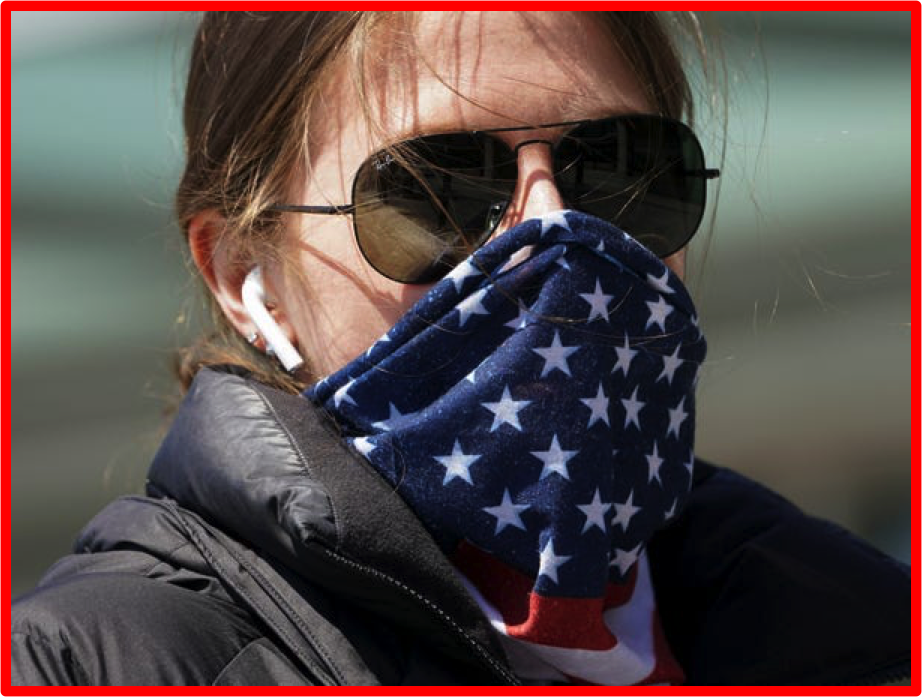
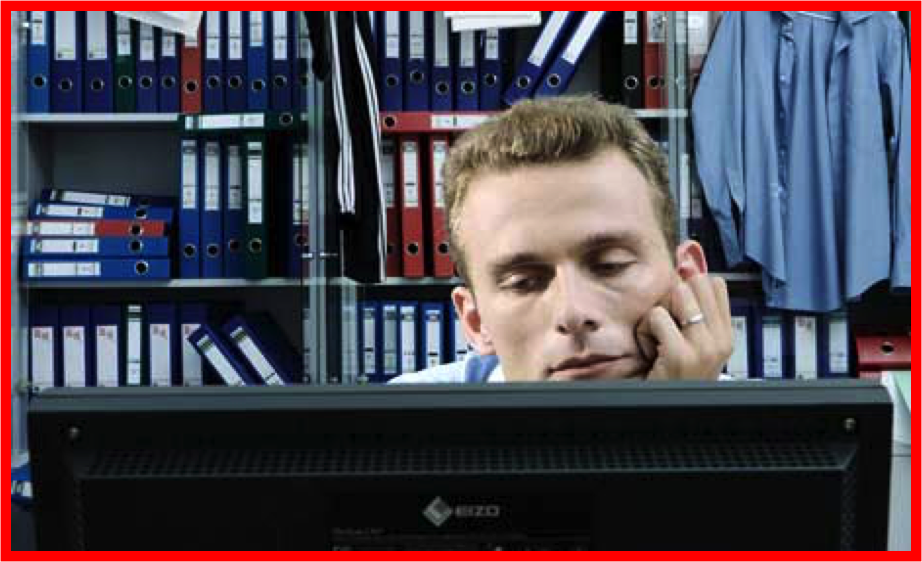 Photo courtesy of The Guardian
 It’s not as easy to be on-camera talent as broadcast journalists make it look! Talking to a camera lens or a desktop computer as though it was a person is not easy or natural. But with social distancing, being sheltered in place and working from home, it is becoming a necessity. Video conferences and conversations, to remote media and job interviews to presidential campaigns.
Take heart and some guidance from the folks at READY FOR MEDIA who have been coaching clients for remote interviews for decades.
• Pay attention to the background
• Create a backdrop or stage and a quiet space
• Sit up straight
• Be energetic
• Have a window or light source in front of you, not behind you
• Stand or sit on the edge of your chair, avoid sitting on your elbows or forearms
• Look at the camera or pinhole camera (not at your image on the screen) to give direct eye contact
• Study network news anchors for technique and wardrobe
• Dress appropriately, women in a bright, clear, solid color jacket or dress. Men in an open collar blue dress shirt and blazer
• Make sure of your facts
• Smile
• Gesture but don’t fidget. Avoid covering your face with your hands
• Arrange to be interviewed if possible vs. a lecture
• Have an agenda or plan to follow
• Acknowledge mistakes or gaffes with humor and humility
• Appreciate the up close and personal quality of one-on-one to camera
- Don’t Share Your AirBy Anne Ready
A succinct soundbite that says it all is the key to crisis communication: “Don’t share your air.”
It was crafted by scientist and seismologist Lucy Jones. In every Los Angeles earthquake for more than 30 years, Dr. Jones explained complex science to us in ways that helped us understand. When the earth shook and we got scared, she “talked us down, without ever talking down to us,” Los Angeles Times city beat columnist Nita Lelyveld reported recently.
“Why in all the public messaging we’re getting has no one else come up with a directive so straightforward, so spot on, so easy to remember?”
“It’s pretty clear, ” said Dr. Jones, who is now retired from the federal government.”We are suffering from our inability to use science in decision making.” The aim of her new Dr. Lucy Jones Center for Science and Society is to reverse that trend and help communities grow stronger by incorporating scientific facts into their policymaking.
Crisis Communication
Dr. Jones learned from her longtime role as a disaster communicator what we teach at READY FOR MEDIA. “In a crisis you can’t give people a list of dozens of measures to take for their safety. If you do, you might well overwhelm.
“Overwhelmed, people often toss up their hands and say, I can’t do all you’re asking of me, and so I’ll do nothing at all. And doing nothing in our current crisis just isn’t an option.
“The thing about the pandemic is people are going to die whether you believe in it or not.”
- #PublicRelations
 By Anne Ready
 Listening to customers and employees and learning from them “to be a better company” is #PublicRelations at its finest.
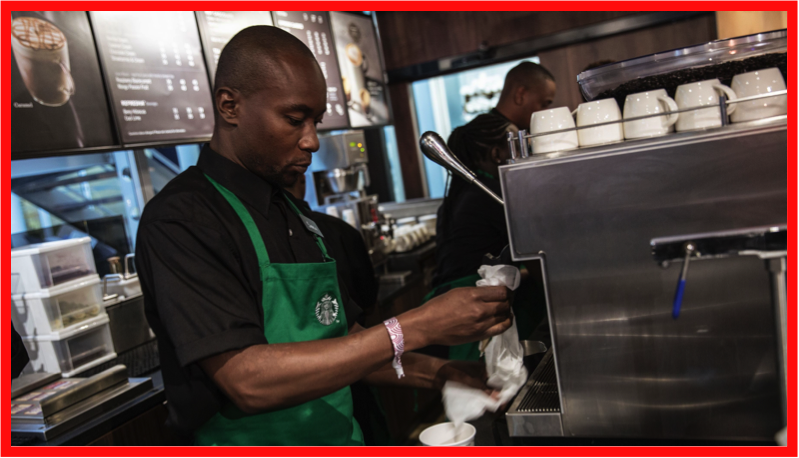
 Courtesy of MentalFloss.com
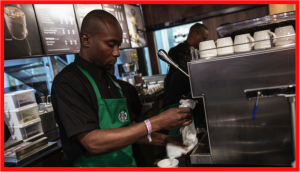
Think back to when Starbucks banned Black Lives Matter clothing and accessories on its baristas — a ban it quickly reversed. According to the New York Times, “Amid social media backlash, the coffee chain also declared that it will provide 250,000 Starbucks-branded Black Lives Matter shirts for baristas and other employees who want them.”
“Starbucks stands in solidarity with our Black partners, community and customers as they take a stand for justice,” the company announced, “while proudly wearing the green apron and standing united together.”
Perhaps because the movement against incidents of police injustice to Blacks is now so widespread, American employers are responding. U.S. Corporations that once shied away from taking sides, are trending toward aligning themselves with #BlackLivesMatter.
Americus Reed, a marketing professor at the Wharton School at the University of Pennsylvania, told the New York Times, “Speaking out on social issues is often a calculated decision, a form of “values and identity-driven targeted marketing. By aligning corporate values with what customers care about, companies are hoping to build a sense of loyalty. And a deeper sense of personal connection.
C-Suite
“It’s smart — for C-suite executives. Hopefully, because it’s moral. But also because they understand the long-term economic game.”
Mark Mason, the chief financial officer of Citigroup, personally blogged on the company’s website.
Nike CEO John Donahoe told workers they would get Juneteenth off starting this year as a way to celebrate Black culture and history.
Twitter co-founder and CEO Jack Dorsey tweeted that U.S. employees would have Juneteenth off “forevermore.” as a day for “celebration, education, and connection.”
The NFL, the New York Times and other businesses will also give their employees a Juneteenth holiday for the first time this year.
As Reebok wrote to its social media followers: “We are not asking you to buy our shoes. We are asking you to walk in someone else’s.”
- Shooting the Messengers
By Anne Ready
The reporters are the messengers.
And when, a few years ago, #BlackLivesMatter protests over racial discrimination erupted into violence, it spared no one. Incidents impacted mainstream news reporters, freelancers, international correspondents and student journalists.
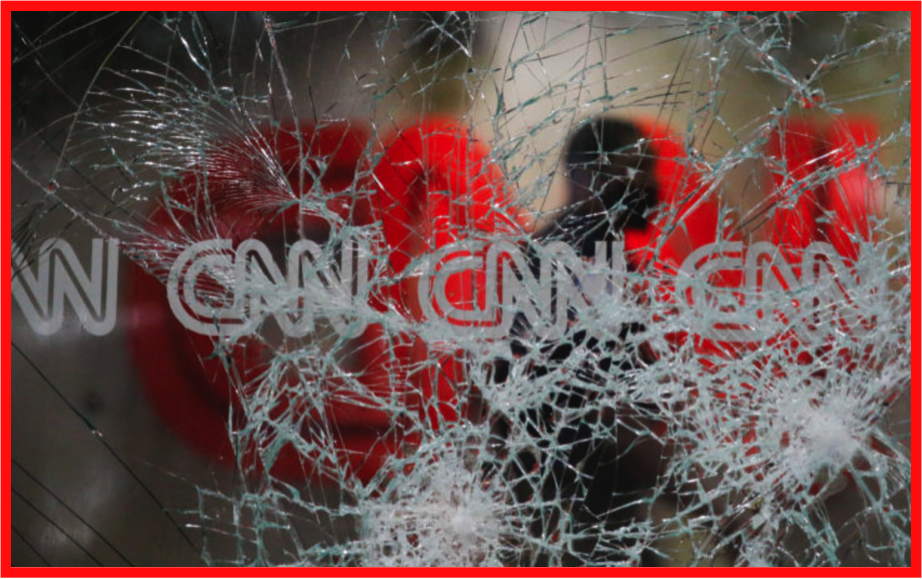
Courtesy of Brynn Anderson | AP
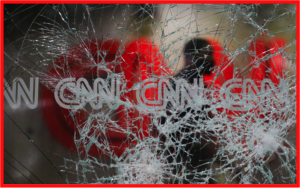
Messenger CNN reporter Omar Jimenez and his crew were arrested live, on television, while reporting from Minneapolis. Protestors attacked and beat cameraman Ian Smith in Pittsburgh. A Wall Street Journal reporter said the police attacked him with riot shields in New York City. Police shot rubber bullets at an NBC reporter near the White House, while protesters attacked a Fox News crew in Washington DC. In Minneapolis, where the protests originated, Reuters videographers and Germany’s DW News reporters were hit with rubber bullets while police sprayed tear gas into the crowd. Linda Tirado, a freelance photojournalist, was shot and permanently blinded in one eye.
Fuel to the Fire
President Trump added fuel to the fire, tweeting that the “lamestream media” are “truly bad people with a sick agenda.”
“By denigrating journalists so often, “commented Suzanne Nossel, chief executive of PEN America, the nonprofit organization devoted to free expression, “he has degraded respect for what journalists do and the crucial role they play in a democracy,”
And, she told media columnist Margaret Sullivan at the Washington Post, “it’s working. He’s been remarkably effective in contributing to this topsy-turvy sense that journalists are the opposition.
“Think of the campaign rallies where Donald Trump egged on the crowds in raucous chants of “CNN sucks.” Or the many times — even in the midst of the coronavirus pandemic — when he has responded to respectful questions on matters of life and death by ripping into the inquiring reporters.”
All Lives Matter
The Financial Times notes his labeling the press, the ‘enemy of the people’ and firing barbs at media ranging from The New York Times to Fox News.
Mr. Trump has urged everyone to hate the press — and apparently, many have heeded him. Press critic and media scholar Jay Rosen of New York University has identified Mr. Trump’s “brand promise” to his base as essentially, “Watch, we will put these people down for you.”
Trash talk
CBS’ Lesley Stahl reported that POTUS admitted as much to her shortly before the 2016 election. “Mr. Trump said, ‘You know why I do it? I do it to discredit you all and demean you all, so when you write negative stories about me, no one will believe you.’ ”
And it’s not just Donald Trump. The hostility stems, at least in part, from a sense that “the media” is just another elite institution that many Americans are convinced doesn’t represent their interests or share their values. “For the disenfranchised and victims of structural inequities such as racism and poverty,” explained Michael J. Socolow, an associate professor of journalism and communication in his blog, Living in a Media World, “‘the media’ can also be a pervasive and on-going part of their problem. That’s why it’s so easy for everyone to see antagonism in the distanced stance and neutrality of the independent observer. During these polarized, emotional times, everyone has to choose a side — but journalists won’t.
“This problem is amplified by the inherent structure of journalism. It is invasive and antagonistic. It asks questions. It invades privacy. It plays both naive and skeptical at the same time. Journalists know that every story has at least ‘two sides.’ Thus, by simply observing professional norms, journalists can be perceived — by law enforcement, and protestors alike — as provoking their own victimization.”
Power of the people
“People are in the streets demanding racial justice, and the public has a right to see it. The power of the people and social justice depends on the freedom of the press,” Brian Hauss, staff attorney with the ACLU’s Speech, Privacy, and Technology Project, told Voice of America. “Every attack on a working journalist is an attempt to hide something shameful, unlawful, or embarrassing,” continued Mr. Socolow. “When we talk of “the media” we lose sight of the individual people comprising the myriad entities jumbled together under that misleading moniker. It’s easy to attack something as diffuse and indefinite as “the media.” Making it an efficient boogeyman, useful for dumping all sorts of frustration and anger.” To quote the Washington Post, “democracy dies in darkness.”
- It Is Rocket Science!By Anne Ready
LOS ANGELES – “Dinosaurs are extinct today because they lacked opposable thumbs and the brainpower to build a space program,” quipped Neil deGrasse Tyson, astrophysicist and author of The Sky is Not the Limit.
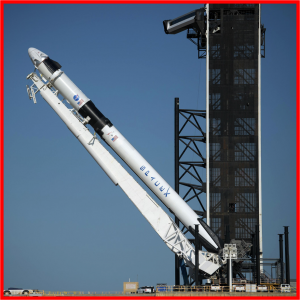
Addressing SpaceX CEO Elon Musk and his crew, Dr. Tyson tweeted: “Good luck to @elonmusk and the @SpacexXcrew. “Though it’s rocket science, rocket launches can still use a little bit of luck.” And weather.
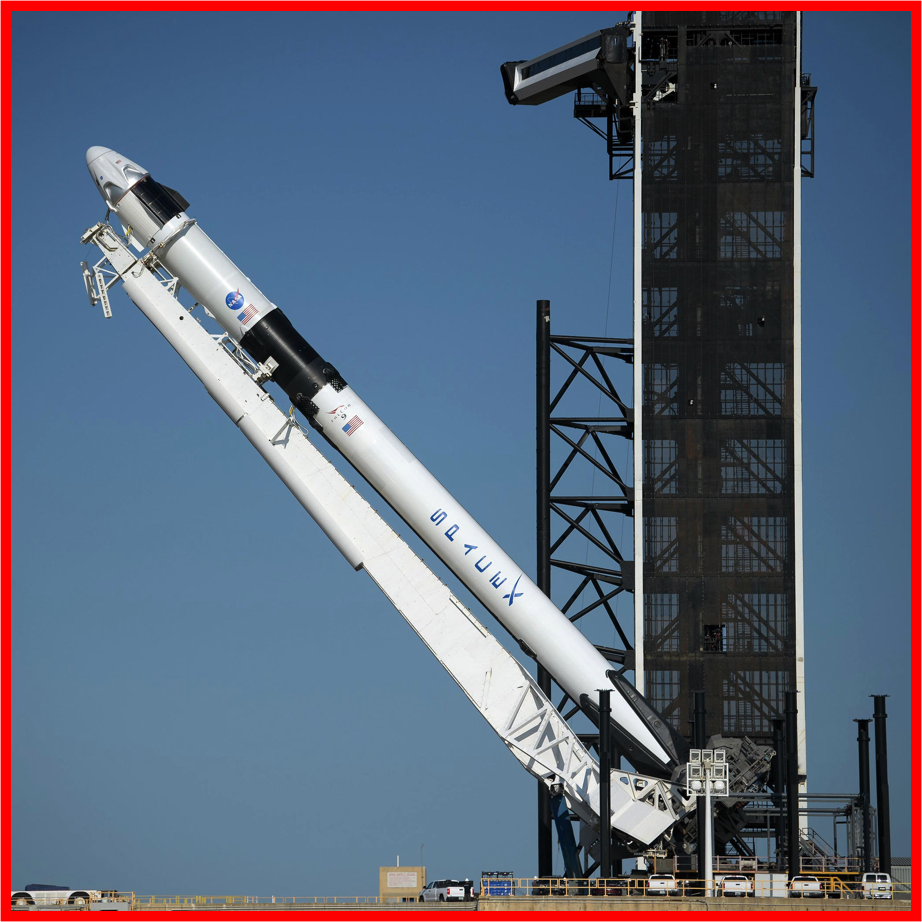
The most important NASA mission in decades lifted off on a Saturday in 2020 on a billionaire’s private rocket. It marked the start of an era of human spaceflight that extends beyond national space agencies. NASA is the consultant and customer for this maiden voyage to take two astronauts to the International Space Station. But SpaceX could also start selling flights into orbit to other people, companies and even other nations. Promising new possibilities of tourism, manufacturing and research while circling Earth.
“On more than one occasion,” the Atlantic Monthly reported, “NASA people said, “‘This is crazy. This is insane.'” Elon Musk’s move-fast-and-break-things mantra was diametrically opposed to NASA’s slow-and-steady ethos.
“Failure is an option here,” Mr Musk offers. “If things are not failing, you are not innovating enough.”
This approach to rocket science “is a grand experiment,” the Atlantic continued. “But it is also the future of spaceflight. Where commercial companies do the work of flying people beyond Earth’s atmosphere.” According to The New York Times, “NASA decided to turn to two private companies: SpaceX and Boeing. In essence, to produce the rental-car equivalent of spacecraft. NASA will then buy tickets aboard its capsules for the rides to space. At a little more than $50 million a ride, it’s much cheaper than Russia has charged for flights to the station.”
READY FOR MEDIA
Decades ago, when NASA had to defend a faltering space program, JPL called on Los Angeles-based media trainers, READY FOR MEDIA to help in crafting messages and coaching their spokesperson to bridge to better news in positive soundbites.
On NASA’s Jet Propulsion Laboratory at the California Institute of Technology website, products are highlighted that wouldn’t exist without the space program. Apple‘s iPhone 12, Nike Air Trainers, Black & Decker dust busters, Diatec ear thermometers, jaws of life, wireless headsets, memory foam, and more functionally-dynamic artificial limbs.
Another space pioneer, Richard Branson’s Virgin Galactic teamed up with Under Armour, an American company that manufactures footwear, sports, and casual apparel to develop a line of space gear. “Created specifically for private astronauts.”
Multi-planetary humans
“Everyone at SpaceX will tell you they are working to make humans multi-planetary,” said former SpaceX Director of Space Operations Garrett Reisman, an ex-astronaut now at the University of Southern California, also a favorite READY FOR MEDIA client.
The Associated Press reports, “But it all comes back to Mr. Musk’s dream. Former NASA chief O’Keefe said “Mr. Musk has his eccentricities, huge doses of self-confidence and persistence, and that last part is key. You have the capacity to get through a setback and look toward … where you’re trying to go.”
For Mr. Musk, it’s Mars. “If the future does not include being out there among the stars and being a multi-planet species, I find that incredibly depressing,” he concluded.